Videos
There’s something I quite like about the Vivino Wine Style Awards, and that is that the winning wines are entirely selected by consumers. Based on the reviews of 35 million users (although some are undeniably more prolific than others!) each year the Vivino tech team take a look at the reviews and ratings of all the wines on the app and tot up the scores to see which wines in which categories came out on top. This includes several categories for the best wines in South America.
This is the fifth year of Vivino’s awards and, as the most-downloaded wine app in the world, it takes into account 120 million ratings. Anyone can add their rating and each opinion holds equal value – no matter if you are a first-time wine buyer or a seasoned wine drinker with 1,000 bottles in one’s cellar.
Vivino is effectively the TripAdvisor of wine, for better or worse. On the downside, a few ratings could destroy the ranking of a wine perhaps because the consumer misunderstood the category or was drinking a faulty bottle. However, on the positive side, the Vivino Wine Style Awards are an unparalleled barometer of what wines are accessible in the global market and which offer enough enjoyment and relative value to be worth the coveted five-star rating.
Appealing to the mass market is also nothing to be sniffed at, and it is certainly harder to make a wine that excites thousands of different palates than a wine that appeases to just one critic. Winning a Vivino Wine Style Award shows that all the cogs of that winery are working together: excellent market positioning, good marketing and global reputation, and, last but certainly not least, making a damn good wine that everyone enjoys.
Here are the highlights of South America’s best-rated wines on Vivino, and arguably the consumers choice of the best wines in South America, with my own verdict of the winners and category.
With racy, complex and distinct white wines coming from both Chile and Argentina, Semillon is one of the most exciting white wine categories in South America today. Winemakers are putting a focus on making South American Semillon a cornerstone of their vinous identity, but its promising future is quite a different story to its long and widespread history.
The history of Semillon wines in the southern cone
The history of this noble French variety, of course, starts in Bordeaux, where the variety originates, and both dry styles and also the lusciously sweet noble rot wines (of Sauternes and neighbouring regions) are made. French Semillon still dominates global production (claiming almost three-quarters of the world’s production) but New World wine regions in Australia, South Africa and the US also make up some impressive numbers. In South America too, Semillon plantings are numerous however there are far fewer than there were half a century ago.
Arriving in the late 19th century to South American shores, Semillon was planted with gusto in by Francophile wine producers in Chile and Argentina during the mid-20th century. This was the period in which producers were intent on emulating Bordeaux and plantings of other Bordeaux varieties were on the rise as well.
Semillon in Chile
By the 1950s, Semillon made up almost a third of Chile’s vineyard plantings – totalling over 35,000 hectares. Chilean Semillon was one of the most important wine varieties in the country’s history, contending only with País and Cabernet Sauvignon for a similar hectarage. Its reign as Chile’s most important white wine variety didn’t last though.
Towards the end of the 20th century, a tidal wave of Chilean Sauvignon Blanc washed over the country to become the most planted white variety. While Chilean Sauvignon Blanc may be ubiquitous on the wine shelf, plantings — some 15,000 hectares — are still less than half of Semillon plantings at their peak. It has, however, been a sharp downturn for Semillon in Chile and just 950 hectares of Semillon remain. While that number is nothing to be sniffed at, it is the age of these vines (30+ years old) that is exciting winemakers most.
Semillon in Argentina
It’s a similar, although slightly smaller, story in Argentina. There was a great trend for white wine production in the 1970s and plantations of Semillon swept across the country. Semillon become the second most planted white variety within a few short years. At its peak, there were over 5,500 hectares planted however they were largely used for light, easy-drinking jug wines and blends.
As red wine production boomed (Argentina jumped on the Malbec wagon at the turn of the century), Semillon was replaced by other varieties. Today just 750 hectares remain, although – as in Chile – these vines are usually old, with salivating stories to tell.
The Semillon revolution in Chile and Argentina
The statistics might lead you to believe that Chilean Semillon and Argentine Semillon are a downward trend, but I feel it is quite the opposite phenomena occurring today. Whereas historically Semillon was used for cheaper table wines and blends, today’s Semillon wines are strictly premium – and offer some of the most exciting white wines on the continent.
As a variety that retains a punchy acidity, it does well in the sunny climates of Argentina and Chile (where acids in other white varieties drop all too easily in a heatwave). While freshness is almost a given with good vineyard management and attentive harvest timing, what’s compelling about the old vine Semillon coming from Chile and Argentina is the fullness and weight on the palate. The other champion white wines of South America, Torrontés in Argentina and Sauvignon Blanc in Chile, are usually wonderfully aromatic but can be a bit inconsequential in the finish. Whereas the Semillon wines being made could even be seen as the opposite – the focus is much more about the mouthfeel.
The problem Semillon had during its wide dispersion across Chile and Argentina in the 50s and 70s is that it was ahead of its time. White wines weren’t a forte for winemakers in Chile or Argentina in this period and the wines often ended up oxidised, flabby and over-mature. White winemaking in South America is a different story today.
Winemaking technology and expertise have enabled winemakers to make quality Semillon wines that retain their vibrancy and freshness. And, more importantly in my view, there’s a winemaking sensitivity that is driving the Semillon revolution. Rather than making squeaky clean, simple white wines, the tendency is towards fuller, more complex wines that display the character of old vine Semillon.
There’s a tendency towards using longer skin contact, neutral oak barrels and native ferments for Semillon wines in Chile and Argentina. This lends them further to more intricate expressions, and that’s what makes South American Semillon great food wines – or thinking wines. Wines you could even have after dinner, rather than before.
Finally, it seems, the time is right for Semillon in South America.
Semillon wines to try from South America
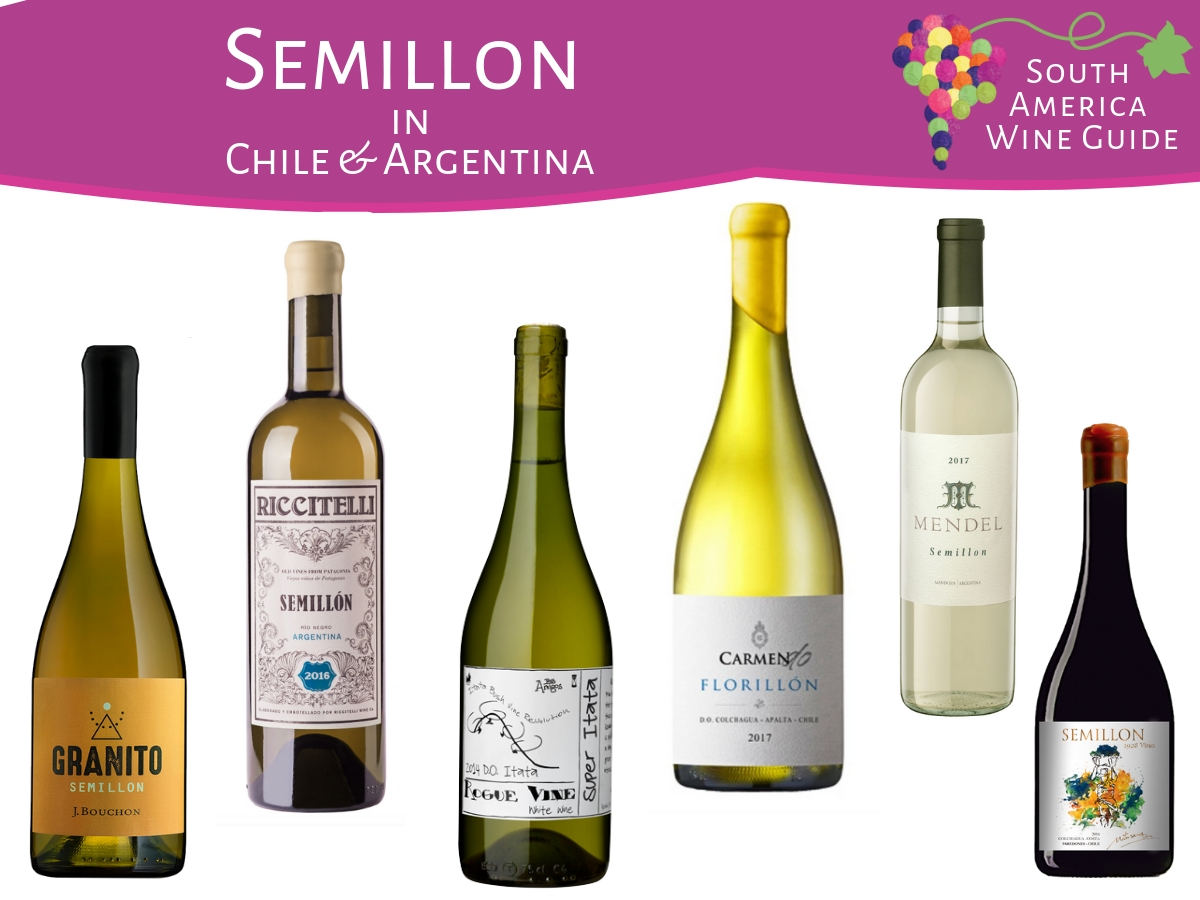
Top Chilean Semillon wines & producers to try
- Florillón & Quejada 1, Carmen (Colchagua)
- Granito & Las Mercedes, Bouchon Family Wines (Maule)
- Vinos Frios del Ano, JA Jofre (Curicó)
- Trisquel, Aresti (Curicó)
- Rogue Vine (blend, Itata)
- El Perla, Bisogno (Maule)
- Semillon 1928, Maturana (Colchagua)
- Molino del Ciego, Roberto Henriquez (Itata)
- Cuarteles Experimentales, Santa Carolina (Colchagua)
- Secano, Mora Reyes (Itata)
Read tasting notes on the Semillon sessions.
Argentine Semillon wines & producers to try
- Mendel (Mendoza)
- Matias Riccitelli (Río Negro)
- Nieto Senetiner (Mendoza)
- Marcelo Pelleriti Wines (Mendoza)
- Lagarde (Mendoza)
- Finca Suarez (Mendoza)
- Lui (Mendoza)
- Ricardo Santos (Mendoza)
- Via Revolucionaria / Passionate Wines (Mendoza)
- Finca La Anita (Mendoza)
- El Relator, sparkling (Mendoza)
- Marcelo Miras (Río Negro)
- Humberto Canale (Río Negro)
PS. A note to any grammarphiles out there: Semillon is often written without an accent in the southern cone and internationally. In France the accent is above the e (Sémillon), a spelling sometimes adopted in Chile. In Argentina, the accent is more commonly placed over the o (Semillón). I’ve adopted the accent-less spelling. Please don’t take offence.
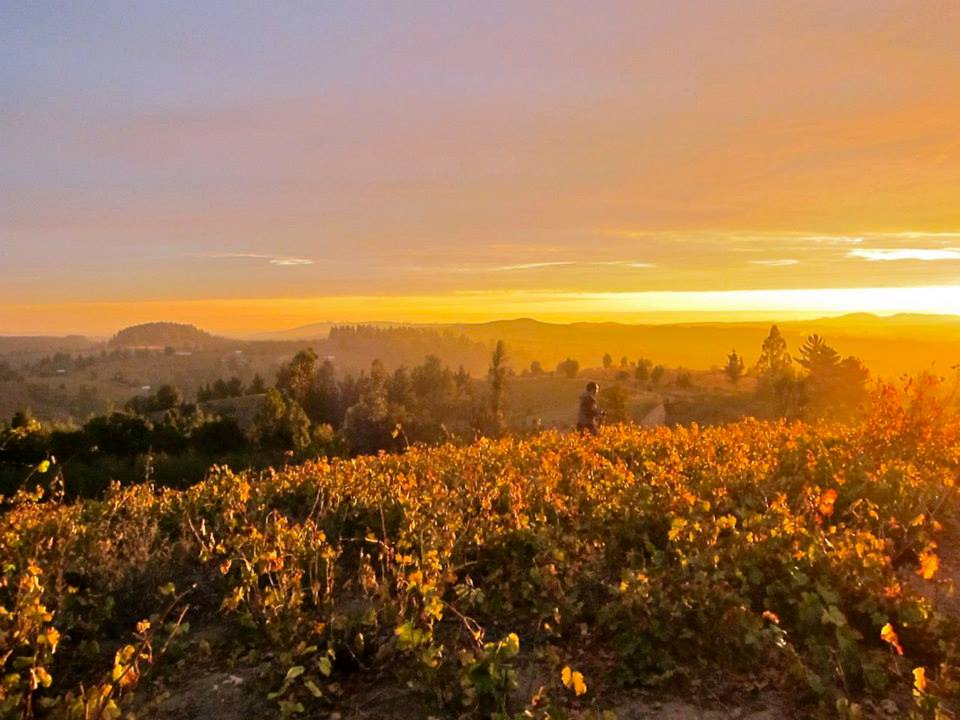
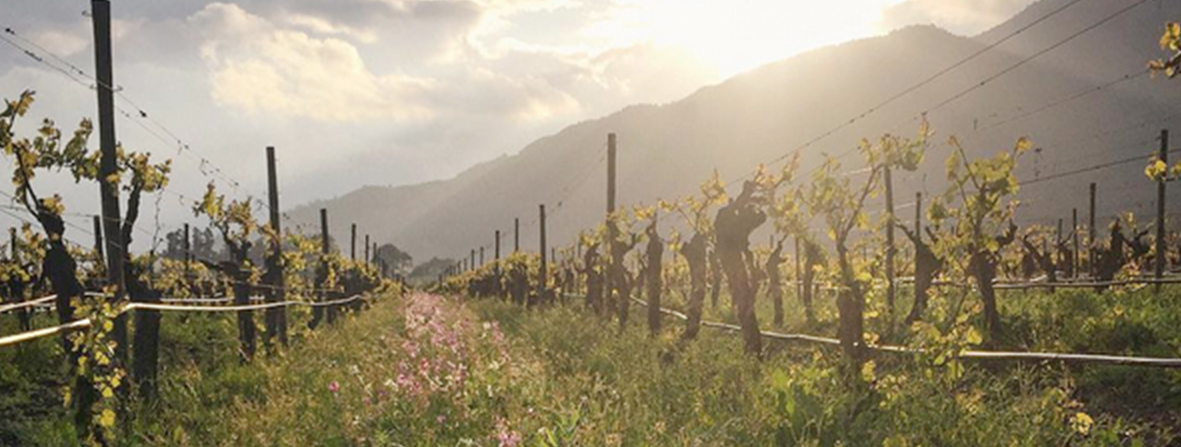
Main image taken by Kendall Johnson of Rogue Vine winemaker Leo Erazo among old vines in Itata.
Where passion will take you…
I’m not the only one that has fallen in love with Mendoza. We are many. Thousands in fact. Each year, hundreds of foreigners come to Argentina’s wine lands and they fall in love. With the wine, with the mountains, with the sunshine, sometimes with a local. Those who fall really hard, tend to buy a vineyard. And that’s the case of the 60 owners of Alpasión…
It was love at first sight for a group of friends who were visiting Mendoza on a business-away trip. Over a long dinner and copious amounts of wine, they decided to invest in a vineyard together. They didn’t invest in a vineyard per se – but an 87-hectare virgin territory which had never been planted before! In 2014, having recruited several more shareholders and wine lovers, they began planting their 60-hectare vineyard in the Uco Valley.
It’s the ideal spot for vines, as agronomist Guillermo Cacciaguerra explains:
Today the property boasts 9 different varieties planted across the estate and last year was the first year that they began to harvest their own fruit. This coming year, they will also be vinifying their first wines on the property in their own winery which is just a few months from completion.
Under the talented hand of Argentine winemaker Karim Mussi, Alpasión has in fact already been producing wine for several years using fruit from neighbouring estates. The idea was to start by making wines from the local region as their own vines come of age.
At the moment, Alpasión is making a handful of red varieties and blends, and one Sauvignon Blanc. Malbec is obviously the flagship, but there’s also a rather delicious Cabernet Franc and a very interesting Petit Verdot which you can taste on a visit:
Visiting Alpasión
Most people, however, don’t come to Alpasión just for wine tasting. But for the restaurant and the lodge.
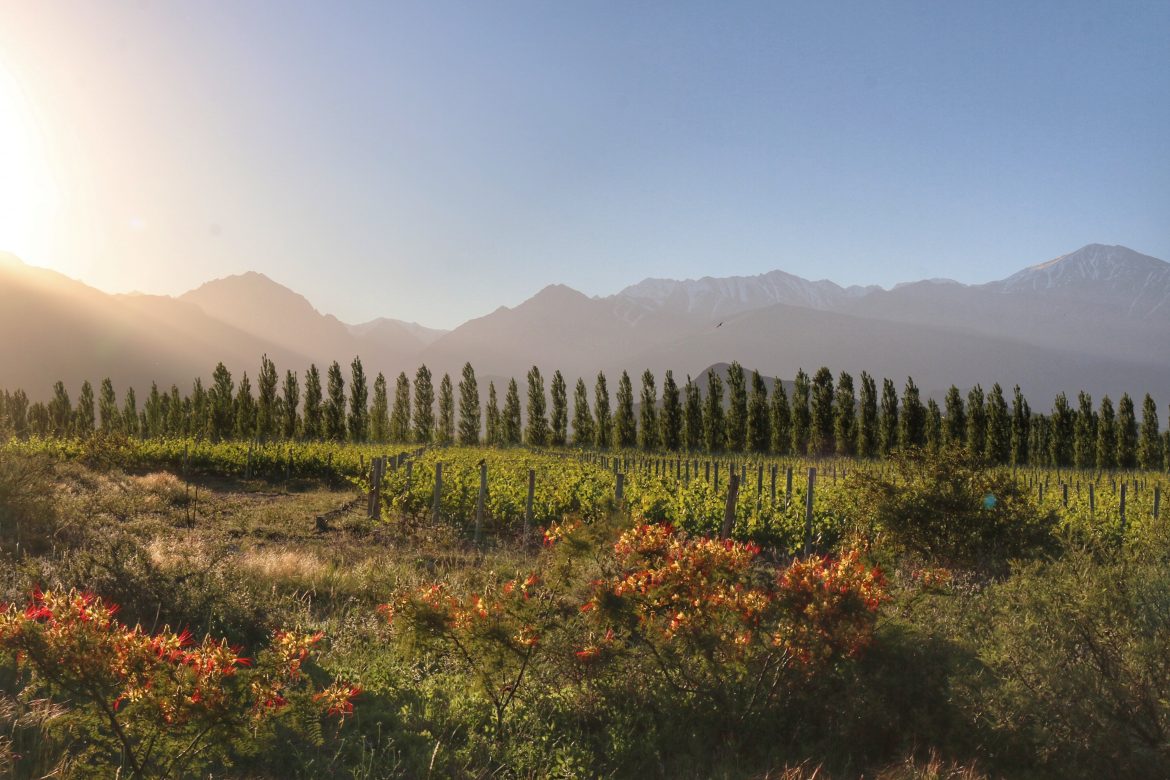
In a dramatic location at the foot of the Andes mountains, Alpasión has some of the most enviable views in the Mendoza. Set between a maze of vineyards, the boutique lodge is a home away from home. Comfortable living spaces, a pool and your own private patio and hammock make it easy to while away the afternoon following a day wine tasting in the Uco Valley. In the evening, you can stroll down to the intimate restaurant where their in-house chef Héctor Ordenes cooks up a fantastic wine-paired menu each evening.
It’s easy to see why the owners fell in love with Mendoza and, after a night in Alpasión, resting and rising with the stunning Andes mountains in the backdrop, I dare you not to fall in love either. I certainly fell in love with Mendoza all over again.
Check out Alpasión chef Héctor Ordenes’ recipe for Argentine empanadas and a video on how to make them here!