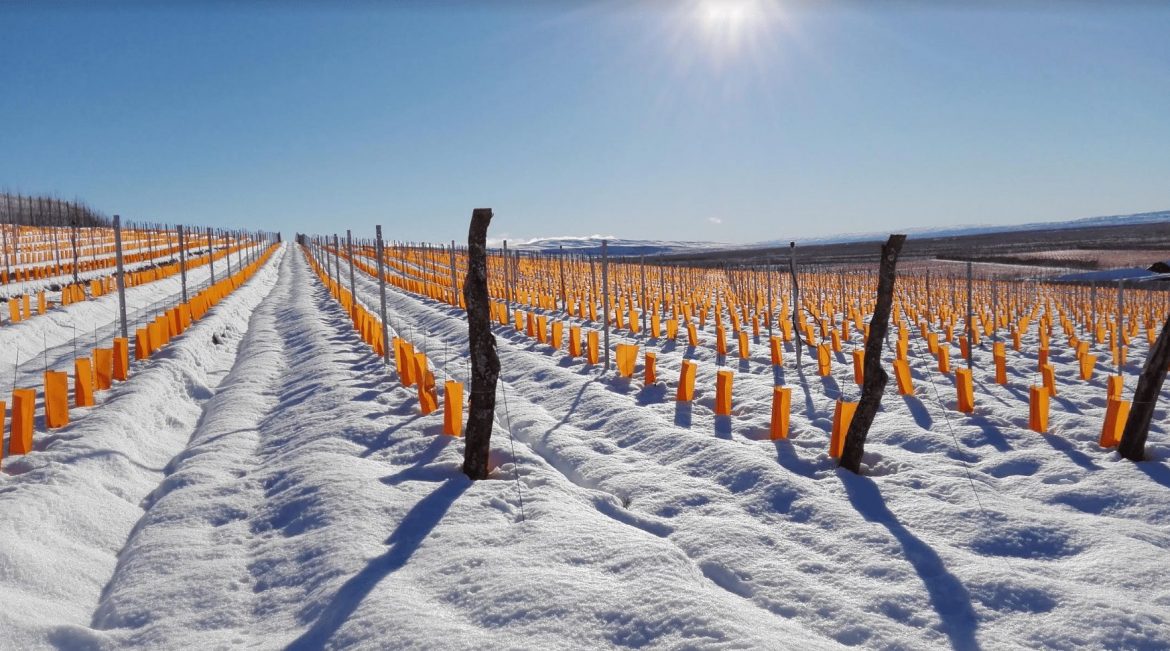
Río Negro was the heartland of Patagonian wine production and this fertile river valley has been planted wine vines for over 100 years. Although Río Negro is still the second largest wine region in southern Argentina (just pipped to the post by Neuquen), it is, unfortunately, one in decline – its old vines being regularly abandoned due to the diminishing infrastructure and labour force in the Río Negro wine region.
In the heydey of Río Negro, in the early 20th century, it was the third most important wine region in Argentina with over 300 wineries and some 18,000 hectares of vines. There was during this time a great diversity of grape varieties including more obscure varieties including Trousseau, Refosco, Semillon and Riesling.
It is the existence of these old vines which is alluring wine producers to refocus their energies and attention on this ebbing wine region. The rediscovery of some of the low yielding old vines, of well-known varieties (such as Pinot Noir and Malbec) and lesser-known varieties, is producing some of the most exciting wines in Argentina today.
The wines of Río Negro are known for their balance and elegance, partly due to the older age of vines in the wine region but also due to the low altitude and greater latitude which gives slightly milder temperatures than in the Cuyo region with great luminosity, thermal amplitude and slower maturation. The Río Negro wine region is capable of producing a wide range of grape varieties: from fresh Riesling and Pinot Noir wines to nuanced Malbec and Cabernet Sauvignon.
The Río Negro wine region may still have its challenges, and the number of producers is still dwindling, but Río Negro is certainly one to watch. Although quantity is dropping, the quality of wines from Río Negro has never been better.