We caught up with winemaker and doctor Laura Catena, from the renowned Catena Zapata wine dynasty, for 80 Harvests and asked her about the history of Malbec in Argentina and its future direction in the different regions of Mendoza. If you are interested in learning about the regions of Mendoza, the clonal selection of Malbec and what makes it work in Argentina, this is the interview for you!


If you ever thought Chile was just Carmenere, you would be sorely mistaken according to the wine flights of the Premium Tasting in Santiago last week. Thirty of the top scoring wines came out to play in the blind tasting, and not one of them was pure Carmenere! There were blends of all sorts and a host of different single varieties including Sauvignon Blanc, Carignan, Pinot Noir, Cabernet Sauvignon, Syrah, Malbec, and Cinsault. What shone at this tasting was diversity.
What tends to happen with the top scoring wines of a country is that the wines are dominated by one variety – in the case of Argentina, it is Malbec. However Chile is clearly onto something else.
There was not only diversity in the varieties but in the valleys and styles of wine. ‘Ten years ago all of these Carignan would have tasted very similar,’ said one of the presenters, journalist Patricio Tapia, ‘today we see a huge range of styles, which hopefully reflect all the different terroirs.’
The other presenter at the tasting, and south America’s only Master Sommelier, Hector Vergara reflected on his long experience in tasting Chile’s wines and how the wines today are at a new level: ‘Today we have a great range of truly worldclass wines that we as Chileans can be proud to show the world.’
This was the first Premium Tasting to be held in Santiago, after several editions in Mendoza, and creator Nicolas Aleman confirms that they will be continuing for years to come: “It went really well and we are already planning the tasting for next year in June. We are going to add a day of talks and seminars, like we do in Mendoza, for next year as well. Everyone has given us really positive feedback – from the attendees and the wineries. We are very pleased and look forward to continuing in the future!”
The next Premium Tasting is in Mendoza, in August, where there will be two days of the event: the first day of talks and seminars, and the second day of tasting.
The wines tasted:


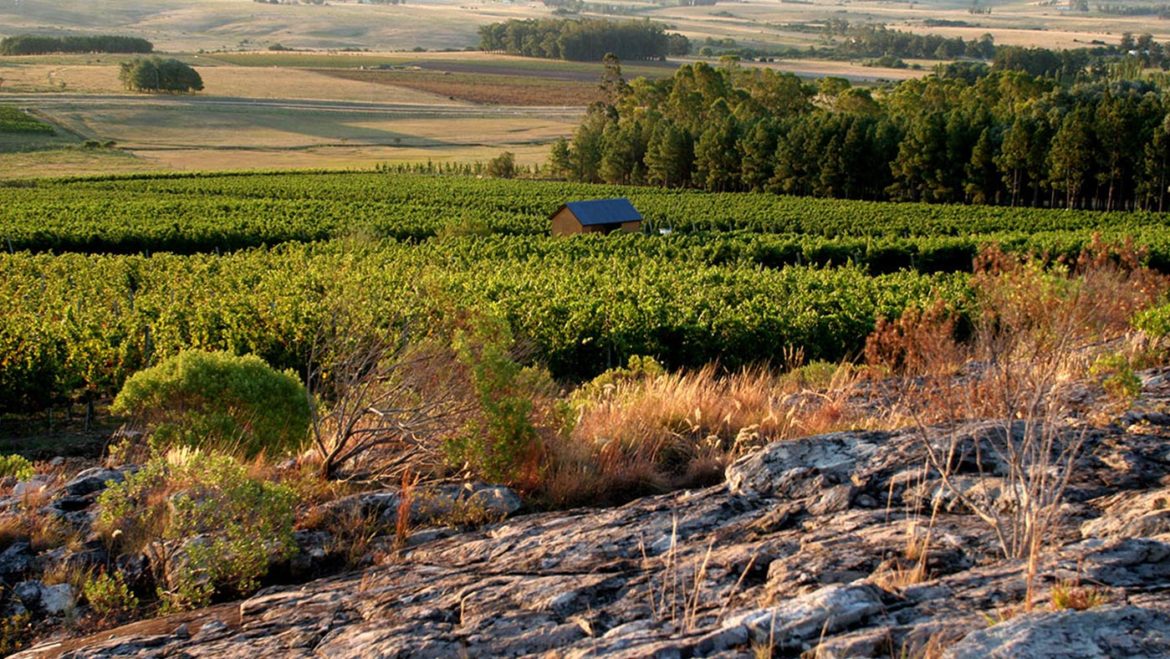
Uruguay may be small compared to its Goliath neighbours (Argentina and Brazil), but for what it lacks in size it makes up for in diversity. Uruguay has no less than 99 classified soil types and has wine regions that range from rocky coastal hills to humid pampa.
Canelones & Montevideo
Maldonado
Lavalleja
Atlántida
Rocha
San José
Colonia
Durazno
Rivera
Paysandú
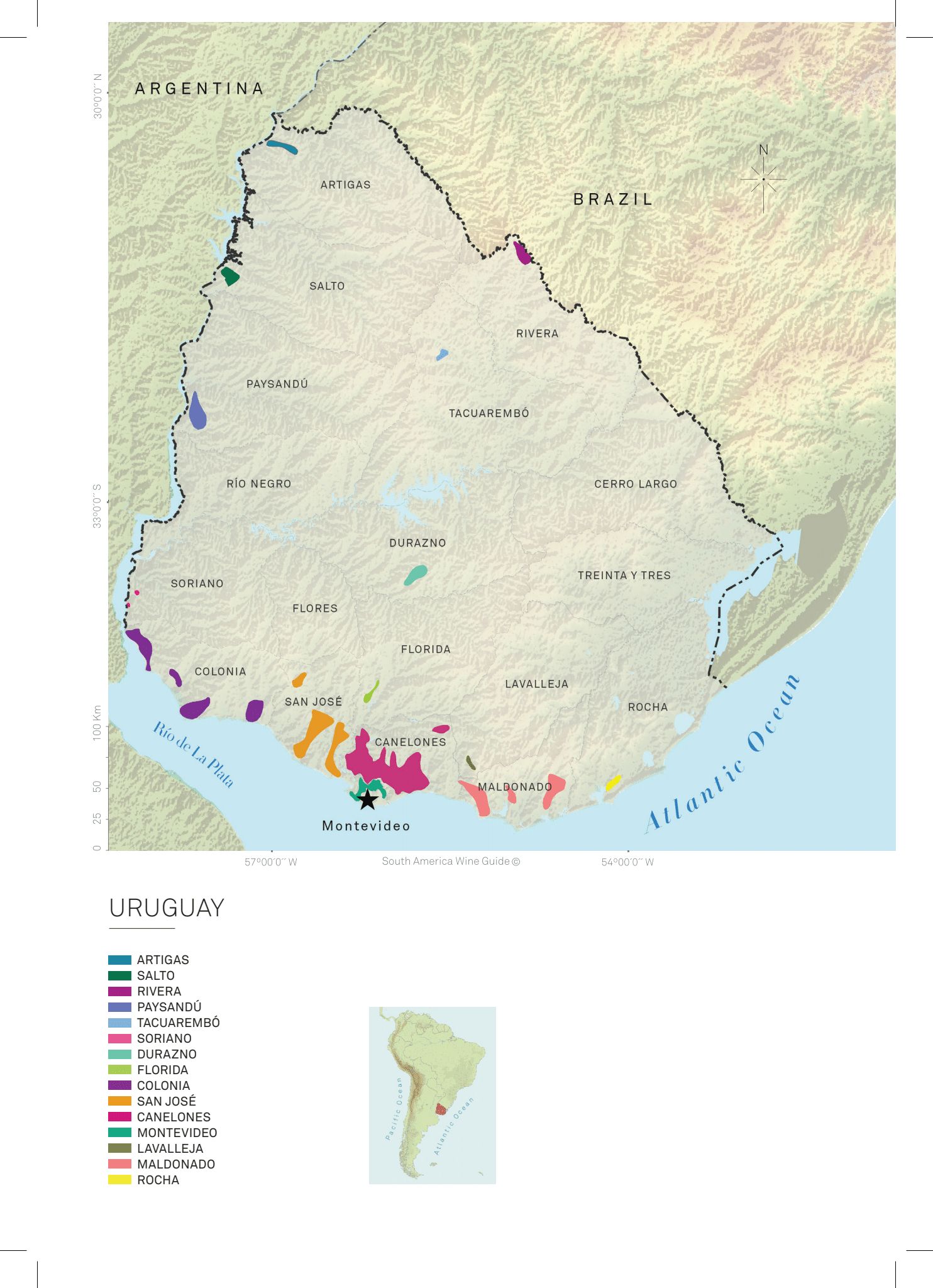
Guide to Uruguay’s wine regions
Canelones & Montevideo – Uruguay’s wine capital
The biggest and most important wine region in Uruguay, Canelones is home to over 60% of the country’s wine production. Just on the outskirts of Montevideo, it is perhaps because of its location that Canelones became the capital of wine production – being conveniently close in proximity to the consumers.
Canelones has rich and heavy soil with some calcareous soils, and is renowned for being the home of Tannat. There are actually many different varieties planted here (Cabernet Sauvignon, Merlot, Sauvignon Blanc, Chardonnay, Albariño, Pinot Noir, Viognier… the list is almost endless). However, as a statement in the survival of the fittest, it is Tannat that came out trumps.
Tannat happily withstands the humidity (Canelones has an average of 1000mm of rain a year) and produces consistently good quality wines with great colour, acidity and structure each year. The heavy soils suit varieties like Tannat but careful vineyard management and modern viticulture also allows for a range of different varieties to perform well, depending on the vintage.
Recommended producers: De Lucca, Pizzorno, Marichal, Carrau, Pisano, Familia Deicas, Viña Progreso, Bouza, Artesana
Click here to read our ultimate guide to Canelones & Montevideo and learn about its notable producers and best wines to try!
Montevideo
Some of the older wineries are still located in Montevideo, but with the urbanisation of the capital city, most of the vineyards have moved outside of Montevideo to accommodate the growing population there. Four in ten Uruguayans live in Montevideo!
However, for those that remain on the outskirts, the conditions are very similar to Canelones and most of the vineyards are right on the border. Several wineries technically have their winery facilities in Montevideo although the vineyards are more commonly located in Canelones.
Maldonado – Uruguay’s newest coastal wine region
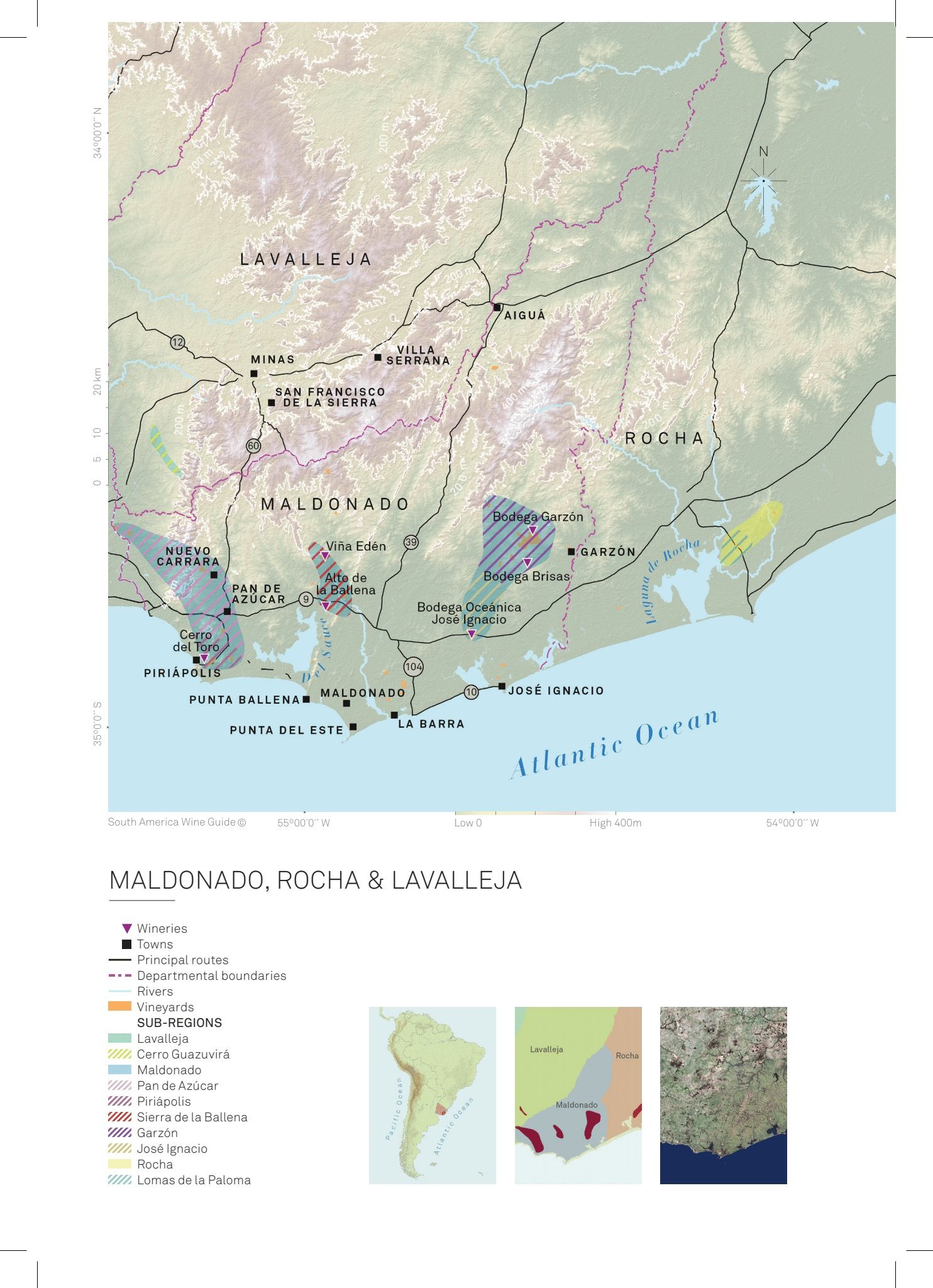
While Canelones is the past and present of Uruguayan wine, Maldonado is most certainly the future. No other region has the same extent of new development and investment, and it is easy to see why Maldonado has become such a hot spot for Uruguayan wine.
The soils are poor, with better drainage, and have a mix of granite, rocky, and sandy soils. The climate is fresher with a stronger maritime influence and the hills are higher, meaning the cooler temperatures and wind reduce the humidity and can help make more aromatic wines with higher acidity and better vine health.
Varieties range from fresh whites like Albariño, Viognier, Sauvignon Blanc and Riesling, through to light reds like Pinot Noir and Sangiovese, and darker reds like Cabernet Franc, Merlot and Tannat, of course.
Recommended producers: Alto la Ballena, Garzon, Bouza (Pan de Azucar), José Ignacio, Viña Edén, Familia Deicas
Click here to read our ultimate guide to Maldonado and learn more about this exciting wine region!
Lavalleja
Just above Maldonado, with similar conditions, is Uruguay’s Lavalleja department which has relatively few vineyards but there are a couple interesting developments, including this extreme volcanic outcrop on Cerro del Guazuvira where Familia Deicas is making wines:
Recommended producers: Familia Deicas
Atlántida
Strictly part of Canelones, Atlántida is sandwiched between Montevideo city and Maldonado on the coast. This is a small wine region but it shares similar climatic characteristics of Maldonado vineyards with the coastal breezes and cooler temperatures than Canelones (although a bit milder than Maldonado). You will find a mixture of varieties and the area is suited equally to both white and red.
Recommended producers: Viñedo de los Vientos, Bracco Bosca
Rocha – a new frontier
Rocha is the easternmost coastal region, continuing on from Maldonado towards Brazil. It shares the same characteristics as Maldonado but is little explored in terms of vineyards so far.
Rocha is the new frontier of coastal vineyards in Uruguay and currently being explored by a handful of intrepid local producers.
San José – coastal development to the west
Between Colonia and Montevideo, San Jose is Canelones’ little brother although new sites are seeking the more extreme coastal influence and poorer soils.
The more traditional wine regions and historical vineyards of San Jose are planted on gentle, sloping hill formation with a slight influence from the estuary and shares similar characteristics to Montevideo and Canelones.
The newer vineyards in San Jose are planted on poor soils, mainly granite and schist-based. A particularly notable vineyard in the region is Sierra de Mahoma where Familia Deicas makes some excellent wines.
Colonia – Uruguay’s riverside vineyards
Just across the river from Buenos Aires, Colonia faces a large body of water but the Rio de la Plata is much warmer than the Atlantic sea, mitigating the maritime effects. Colonia is also a hotspot for vineyard development at the moment, however, the new investments are much smaller and lifestyle orientated. Colonia is a growing tourist destination and good wine always accompanies the good life!
This is both a historic and new wine region and has a mixture of regions within a very small distance. A bit further inland, the soils are rich and fertile – making them more suited for reds; however, right on the riverbanks crushed fossils leave pockets of calcareous soils which have proved good for Sauvignon Blanc among other varieties.
Recommended producers: Narbona, Campotinto, El Legado
Durazno – Uruguay’s central-most wine region
Right in the middle of Uruguay, below the Lago Rincon del Bonete, Durazno is a small wine region with a warmer climate that allows good ripening of the later-maturing varieties such as Cabernet Sauvignon. The clay and sand soils have reasonably good drainage and harvest is always a couple of weeks earlier than Canelones, meaning the grape ripening cycle finishes before the Autumn rains.
Recommended producers: El Capricho
Rivera – Uruguay on the border of Brazil

In the far north east of Uruguay, Rivera borders Brazil and its wine region Campanha. The soils are much poorer, with good drainage, and the warmer temperatures also allow later-ripening varieties to mature well. The region is well suited to Tannat and Cabernet Sauvignon.
Recommended producers: Bodega Cerro Chapeu
Paysandú, El Salto, Artigas
These three regions line up the northwestern front of Uruguay along the Rio de la Plata. You have a mix of soils here with lots of organic material and streaks of stones and calcium carbonate. The climate is warmer with high humidity. Because of the higher humidity, the majority of the wines here are destined to table wine. The region is best known for Tannat.
Want to know more about
the wine regions of Uruguay?
ORDER YOUR COPY of The South America Wine Guide now!
Or get the Uruguay Wine Guide e-book!
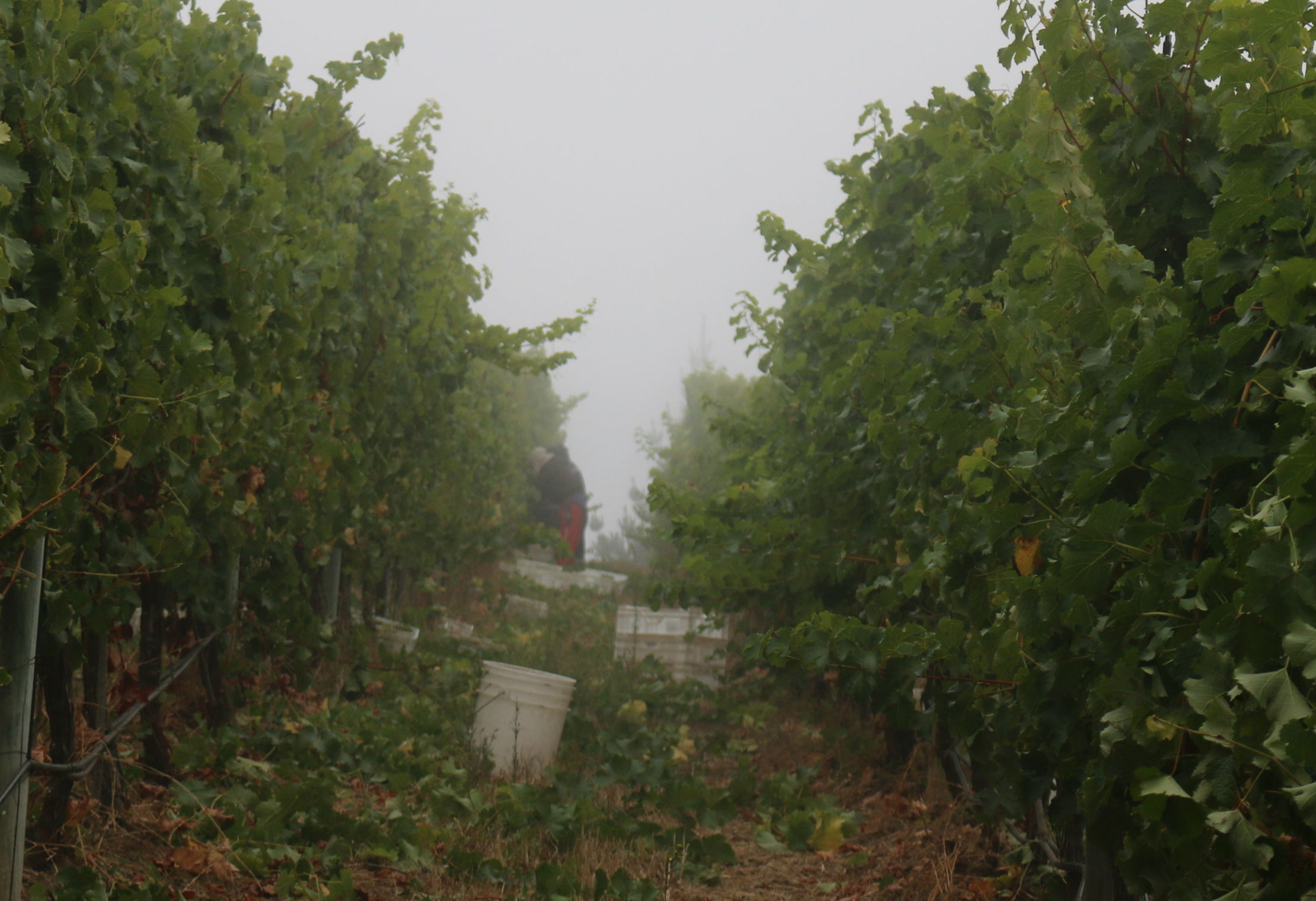
Both sides of the Andes were affected by the El Niño this year, and Chile was hit in most of its regions by the cool and wet cycle that complicated 2016’s harvest. Throughout the central valleys of Maipo, Colchagua, Curico and Cachapoal, the harvest was delayed by a couple weeks up to a month which presented big problems for some producers as heavy showers in April caused havoc, dropping production numbers by around a fifth overall.
While numbers were down across the country, some producers were very happy with the cooler style of the red wines coming in. “There was a very slow maturity which is great, it has taken on sugar much slower than the last few years with lower alcohols,” said Marcelo Retamal, winemaker for De Martino in Maipo.
The coastal regions of Casablanca and San Antonio also suffered a wetter year meaning vineyard management was more expensive and taxing, although the early ripening varieties had promising results.
In Maule, known as the Secano Interior (dry interior), the rains also affected some producers however the biggest impact was in the more densely planted large farms who had more logistical issues to bring in the fruit before the rain. The small, independent producers with lower yields had a cooler year with good results if they picked before the rain.
“It was a difficult year for large high density farms that have mechanized planting,” said Derek Mossman who makes his his boutique production for Garage Wine Co in the region. “It is very sad to see so much fruit further north abandoned and rotting. 2016 will no doubt make for less quality at the lower end. That said certain dry-farmed wines from the Secano will be stellar. It was an incredible year for Garnacha harvested before any rain. It is deep and flavourful great acidity and softer than the previous few years.”